Corporate

UNOC and Government Partners Tour EACOP Infrastructure in Tanzania

Published: October 8, 2026
UNOC and Government Partners Tour EACOP Infrastructure in Tanzania

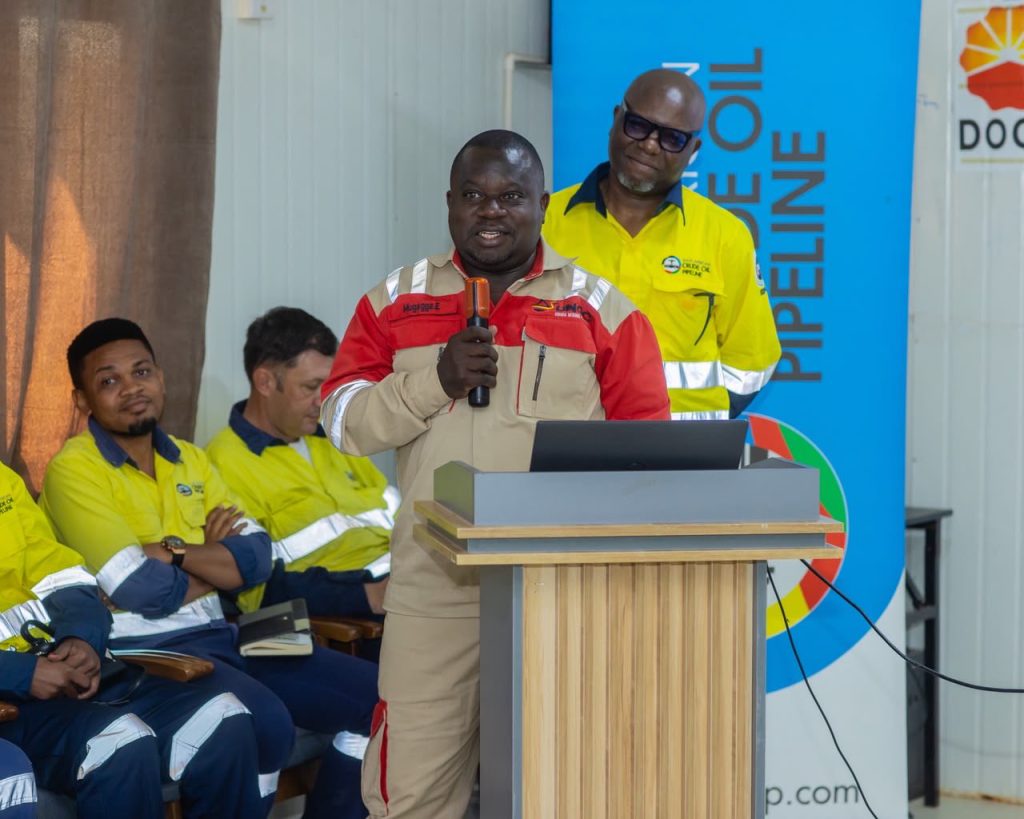
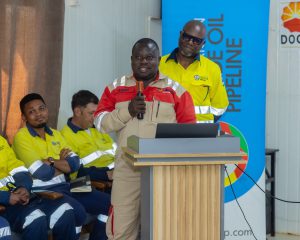
This week, UNOC, together with the Office of the Auditor General and key Government stakeholders, undertook a technical tour of the EACOP project infrastructure in Tanzania. The delegation engaged project management on implementation milestones and challenges.

From the marine terminal to the storage tanks, the visit offered a closer look at the infrastructure that will enable Uganda’s first oil exports, and at the progress being made to turn years of project development into a functioning export system.

Corporate

Ongoing laying of the EACOP

Published: October 8, 2026
Ongoing laying of the EACOP
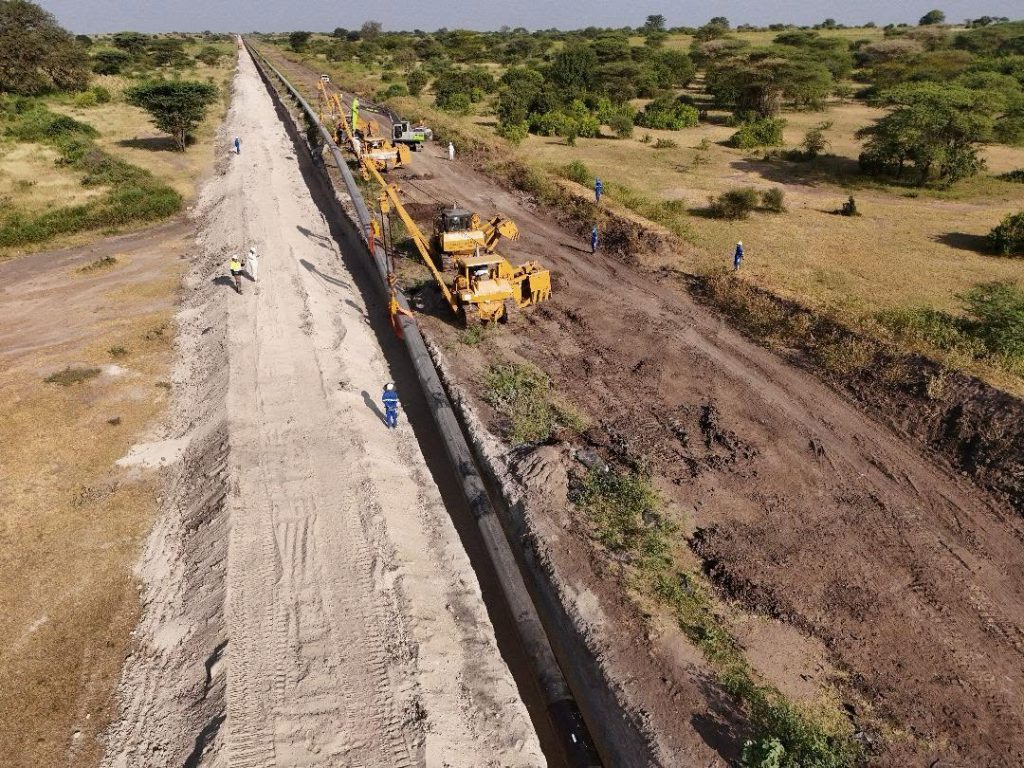
Ongoing laying of the EACOP, one of our key projects.
Some key facts:
-Has a 30-meter corridor a.k.a. right of way.
-Buried one to two meters deep.
-Leak/intrusion detection system.
-Real-time monitoring.
Corporate

Breaking Barriers: Empowering Women Through WEEN, a Bold New Initiative

Oil & Gas in Uganda

Published: October 2, 2026

The promotion of gender equity and diversity in the energy and extractives industry is the ultimate goal of the newly established WEEN. The Women in Energy and Extractives Network (WEEN) was officially launched on Thursday 11th May 2023 by the Uganda National Oil Company (UNOC), marking a significant milestone in promoting gender equality and empowerment in the energy and extractives sectors. This ground-breaking initiative provides a platform for women in the industry to connect and support each other’s growth and development while driving change in the sector. Women’s empowerment is at the heart of this initiative, as it aims to enable them to reach their full potential.

Historically, the energy and extractive sectors have been male-dominated, significantly losing talent and potential. The WEEN initiative seeks to change this by providing a platform for women to be mentored, learn and network in order to tap into new and wider opportunities. Women have the potential to be transformative agents of change in these sectors by bringing fresh perspectives and innovative ideas to the table and acting as role models for other women, encouraging them to pursue careers in these sectors.

WEEN’s mission is clear. It is here to provide a platform that fosters gender integration in the energy and extractives industry’s operations and its objectives are specific. WEEN’s objectives are to strengthen women’s networks in the sector, providing them with a supportive community, elevate the profile of women in the industry and work to eliminate barriers to their advancement. The initiative also aims to enhance women’s participation in the sector by providing access to business structuring, finance, training, academic bursaries, conferences, capacity building, and mentorship, to encourage and foster female leadership in the sector and finally, the network advocates for and strengthens the integration of gender aspects, with a particular focus on women, in energy and extractives policies and programs at national, regional, and global levels.

The WEEN initiative is a breath of fresh air and extremely significant because it recognizes the importance of partnerships and collaboration. Gender equality and women’s empowerment are complex issues requiring multiple stakeholders’ involvement. The initiative seeks to bring together industry leaders, government officials, civil society organizations, students, job seekers and other stakeholders to work together to promote gender equality in the energy and extractive sectors.

UNOC is thrilled to see this initiative become a reality. Through this network, we will advocate for policies and practices that advance women’s rights and opportunities, promote inclusivity and diversity in the workplace, and provide support for women’s growth and development in the Oil and Gas industry. We understand and can’t appreciate enough that the Women in Energy and Extractives Network is an important step towards creating a more inclusive and supportive culture that encourages and recognizes women’s contributions to the sector.

The launch was attended by distinguished guests, including the guest of honour, Hon. Dr Ruth Nankabirwa Sentamu, the Minister of Energy and Mineral Development. The interim chairperson of the organization, Dr Lyoidah Kiconco, the Head of Exploration and New Ventures at UNOC also announced the theme of the launch, “Role of Women in the Energy and Extractives Sector,” and acknowledged the efforts of various stakeholders in addressing the challenges faced by women in the sector.

During the panel discussion on strategies to promote women’s participation in the sector, Barbara Nabuweke, the head of Contracts and Negotiations at UNOC, highlighted the importance of networking opportunities and encouraged women to learn about WEEN and its objectives to secure their rightful place at the table.

The Women in Energy and Extractives Network is a monumental initiative that will play a crucial role in promoting gender equality and empowerment in the energy and extractives sectors. UNOC is thrilled to spearhead this initiative . We urge everyone, both men and women, to become a part of the network and contribute to the inspiring campaign to strengthen women’s position in the industry. By joining forces, we have the power to establish a world where gender parity is not only an aspiration but a tangible achievement.

Corporate

UNOC’s path to Sustainable exploitation of Uganda’s Oil and Gas resources

Oil & Gas in Uganda

Published: October 2, 2026

The Uganda National Oil Company (UNOC) is responsible for managing the Government’s commercial interests in the petroleum sector and is mandated to ensure that the resource is exploited in a sustainable manner. Uganda’s confirmed petroleum resource base is currently estimated at 6.5 billion barrels of Stock Tank Oil-Initially-In-Place (STOIIP). Of this, between 1.4 to 1.7 billion barrels are estimated to be recoverable.

As Uganda prepares for a future where energy demand is high, coupled with expectations of lower Green House Gas (GHG) emissions, environmental safeguards have been put in place to identify and manage Environment, Social and Governance (ESG) risks and impacts associated with UNOC’s operations. Consequently, all our oil and gas projects are adhering to internationally accepted standards for managing environmental and social impacts.

UNOC has developed an ESG Strategy which demonstrates the Company’s commitment, approach and workplan for addressing its Environmental, Social, and Governance aspects. We believe these aspects are intrinsically important to the company and its stakeholders, within its current and future business processes and operations. Six Priority Areas form the foundation of our ESG Strategy and demonstrate UNOC’s continued commitment to sustainability as inspired and guided by all United Nations Sustainable Development Goals (SDGs). These include Good Governance; Climate Change Adaptation & Mitigation; Quality Health Safety & Environment; Social License to Operate; Diversity Equity & Inclusion, and National Participation.

UNOC is currently developing a Climate Action Alliance (CAA) and Plan as a response to the high rate of deforestation in Uganda, and the need to ensure reduced carbon emissions from Uganda’s Oil & Gas sector. The Alliance will bring together different stakeholders to collaboratively develop a sustainable response to climate change issues, through the conservation and establishment of nature-based carbon sinks.

As an initial intervention to realize the equivalent carbon drawdown of 1,000,000 Metric Tonnes of GHG emissions from the atmosphere, a reforestation and afforestation project (40 million trees on 40,000 to 100,000 hectares of land) is being established. A sustainable forestry management strategy and plan are currently being developed to guide the implementation of the projects under the CAA. These projects will contribute to the achievement of the global warming targets set by the Paris Agreement. A Go-Green campaign was also launched at the Uganda Petroleum Institute Kigumba (UPIK) where over 2,350 have been planted.

Several other sustainability initiatives are currently being implemented under UNOC’s Quality, Health, Safety and Environment Management System. These include, Environmental and Social Risk and Impact Assessments, and Resettlement Action Planning and Implementation, among others. These initiatives are critical in determination of ESG material issues to UNOC and its stakeholders. UNOC is also committed to obtaining a social license to operate for its’ projects and enhance the quality of life for project host communities affected by Oil and Gas projects.

Furthermore, the company is exploring the Liquified Petroleum Gas (LPG) business which will promote a shift from the use biomass to cleaner energy. Our oil and gas projects will enable significant production of tonnes of LPG which is needed as a substitute for charcoal and firewood to reduce the loss of forest cover. The planned Refinery also plans to produce cleaner fuels conforming to Euro 5/Afri-6 specifications as well as to reduce emissions from transportation of refined petroleum products from East Africa. Subsequently, the petrochemical industries will significantly improve the balance of trade payments for Uganda.

As Uganda is on a Low Carbon Development pathway, we plan to develop our resources sustainably through adhering to a no flaring policy, decarbonizing of projects through electrification by renewables (hydro, solar and geothermal), embracing technological advances, and strengthening our national environmental laws & regulations among others. With this, we envision that the Oil & Gas sector will contribute to solving the East Africa region’s energy challenges through the provision of energy security.

The above interventions will enhance UNOC’s capacity to sustainably exploit oil and gas resources, to meet Uganda’s current and future energy demands, and ensure the realisation of a just energy transition for the benefit of present and future generations.

Corporate

Cabinet Approves UNOC’s Application for an Exploration License

Oil & Gas in Uganda

Published: October 2, 2026

The year has started on a high note.

Merely 12 days into 2023, the team at Uganda National Oil Company (UNOC) are all smiles following a Government decision regarding Kasuruban, an oil and gas block.

Straddling Hoima, Buliisa and Masindi districts, the 1,285 square kilometer block is one of five made available in the second licensing round. The others are Ngaji, Avivi, Omuka and Turaco all located in the Albertine Graben, Western Uganda.

The Ministry of Energy and Mineral Development (MEMD), responsible for policy and licensing, advertised the blocks in September 2020. Among other reasons, it is meant to ensure additional petroleum resources and reserves.
Following UNOC’s application, and subsequent discussions with MEMD, the Cabinet early this week approved, a decision that has elated UNOC.

“Cabinet also approved the signing of Production Sharing Agreements (PSAs) and grant of exploration licenses for an initial two-year period to Uganda National Oil Company (Kasuruban license),” stated a press release.

The Ministry of ICT and National Guidance issued the press release. According to the document, Australia’s DGR Energy got approval for the Turaco block in Ntoroko.

According to the Chief Legal and Corporate Affairs Officer, Peter Muliisa, MEMD alongside UNOC, will execute the PSA, and subsequently issue an exploration license to UNOC.

“UNOC will embark on the work programs and budgets as stipulated in the application including seeking a joint venture partner as is the industry practice,” Muliisa stated.

“Already, there are several entities that want to work with us, but we will invite bids so as to have an experienced partner,” he told New Vision a local daily after the news broke.

After MEMD invited a “request for qualification”, prompting UNOC’s response, Chief Executive Officer, Proscovia Nabbanja then stated, “Participating in the second lincensing round is well in line with UNOC’s ambitions of eventually attaining the required capacity to become an operator.”

This comes as the Government, represented by UNOC alongside the joint venture partners, steadily inch towards the first oil expected by March 2025.

Should the impending exploration in the two blocks confirm viable oil and gas resources, the “life-span” of the ongoing projects will increase including investment and their ripple effect i.e., revenue for the Government and the attendant services. END

Corporate

UNOC’s Sole Importation of Petroleum Products Brings Stability and Growth to Uganda

Oil & Gas in Uganda

Published: October 2, 2026

By Sarah Birungi Banage

In a landmark move in 2024, the Uganda National Oil Company (UNOC) assumed the role of the sole importer of petroleum products for the Ugandan market. This shift has already had significant short-term outcomes and is expected to transform the country’s economic landscape in the long run as highlighted below.

Enhanced Security of Supply and Price Stability

The past six months have witnessed a consistent and reliable supply of petroleum products in Uganda with over one (1) billion litres of products imported. UNOC’s direct importation role has minimized the risks of shortages and price volatility, ensuring a steady flow of fuel into the country. Consumers have benefited from stable pump prices, allowing businesses and individuals to plan their expenses more effectively. A quick scan through the last months of 2024, and early 2025 i.e. (Oct – Jan) shows fuel prices averaged at UGX 4,434, and 4,932 for diesel and petrol respectively in October 2024; and had by January 2025 averaged at 4,857, and 4608 for diesel and petrol respectively. These prices show a gradual easing in fuel costs unlike prices witnessed at the start of 2024. (UNOC price analysis across different regions)
Additionally, the elimination of middlemen in the supply chain has enhanced Uganda’s security of supply which in turn has reduced price volatility. Moreover, the direct payment of Forex to Ugandan banks in the purchase of petroleum products from UNOC instead of Kenyan financial institutions by Ugandan oil marketing companies has also strengthened the domestic banking sector, improving the national economy.

Competitive Pump Prices and Economic Growth

From the onset, UNOC partnered with Vitol Bahrain who can source petroleum products from refineries with competitive pricing worldwide. This has presented an added advantage to UNOC because product is secured at better pricing for the country. Over the past six months, Uganda has recorded lower and more stable fuel prices compared to her neighbouring countries, creating added advantage to consumers.
This price stability has attracted more oil marketing companies into the Ugandan market, further enhancing economic activity. The certainty in supply and pricing has additionally provided a much-needed boost to businesses reliant on fuel, especially given the equal opportunities treatment given to traders by UNOC unlike in the past with the existence of middlemen.

Eliminating Tax Evasion and Enhancing Market Integrity

Prior to UNOC’s sole importation role, Uganda faced challenges with fuel destined for its market being diverted to neighbouring countries, leading loss of potential tax revenue and supply inconsistencies. UNOC’s involvement has ensured that all imported fuel reaches the domestic market as intended. Strict manifest documentation measures now prevent alterations to shipment destinations, reducing the loss of tax revenues and improving overall market integrity. A quick look at the January 2024 tax revenues for diesel imports shows that UGX 128,967,705,862 was collected, and this figure went up to UGX 129,623,329,830 in January 2025 for diesel imports. Likewise, petrol imports for January 2024 recorded tax revenues amounting to UGX 178,471,308,640 and a notable increase in tax revenues amounting to UGX 181,735,274, 200 for the same period January 2025. (Stats provided by URA)

Long-Term Economic Benefits and Capacity Building

Beyond short-term gains, Uganda is set to experience sustained economic growth due to stable and secure fuel supply. Industries and businesses that depend on petroleum products can operate seamlessly, fostering increased productivity and investment.
UNOC’s involvement in bulk trading business has also played a crucial role in developing local expertise in fuel operations, creating jobs, and stimulating economic activity. Overall, there has been expansion in the business in the sector to include Transporters, Clearing and Forwarding Agents and Dipping services. To date there are 102 Oil Marketing Companies actively in business with UNOC. The company’s experience in managing petroleum imports will be invaluable when Uganda’s own oil refinery becomes operational in the future.

Towards Energy Independence

As Uganda progresses towards refining its own oil, reliance on fuel imports is expected to decline. Additionally new markets to serve Uganda’s own refinery are anticipated to come up making Uganda a vibrant export hub for petroleum products in the region. Finally, Uganda’s refinery will create up to 635 jobs as direct employment during construction and operation, and 5,400 + 300 jobs as indirect employment with sub-contractors and consultancies, stimulating economic growth. This transition will further enhance fuel supply and reliability.

Conclusion
UNOC’s role as the sole importer of petroleum products has already made a tangible impact on Uganda’s economy. With secure supply chains, stable pricing, and increased economic activity, the move has provided much-needed relief to Ugandans. Over time, the country is poised to reap even greater benefits, moving closer to energy independence and long-term economic stability.

The Writer is the Head of Corporate Relations, UNOC

Corporate

How Ugandans are Tapping Oil and Gas Opportunities

Oil & Gas in Uganda

Published: October 2, 2026

Based on responses to oil and gas content posted online, opportunities for individuals and companies elicit the highest response. People want jobs-direct employment and contracts to supply goods and services.

Thankfully, it is not a dream but reality. According, to the Petroleum Authority of Uganda (PAU), out of $7.14 billion approved for investment in the ongoing development phase, $1.914 billion (36%) is committed to Ugandan companies. This brings Uganda closer to the 40% national content target for this phase.
Additionally, approximately $11,909,641 has been injected into the community economy through the provision of goods and services over the years.

Regarding direct employment, according to PAU, 13,067 people were employed in the oil and gas sub-sector by December 2023. Of these, 90% were Ugandans and 4595 were from host communities.
This impressive status is a result of deliberate effort to ensure national (local) content. Simply put, it is the value added or created in the economy through employment of Ugandan workers and the use of goods (and services) available in Uganda and provided by citizens and enterprises.
It is facilitated by the National Oil and Gas Policy (2008), which states, “National participation through shareholding in licences and provision of goods and services by the country’s entrepreneurs shall be some of the key avenues to achieve the desired value creation in the country from these investments.”

Similarly, the National Content Policy (2018) espouses employment of Ugandan citizens and enterprises and increasing the use of locally produced or available goods or services.

Employment in the sector is facilitated by PAU’s National Oil and Gas Talent Register (NOGTR). It is a reference point for employers. By March 2024, over 9125 job seekers had registered. Of these, 1989 were female while 7136 were male. A total of 109 employers are registered on the NOGTR.

Oil companies have contributed by establishing training programmes. Uganda National Oil Company (UNOC) in 2022 sponsored 25 beneficiaries for welders’ training at the Uganda Petroleum Institute Kigumba (UPIK), Kiryandongo. It comprised the basics (foundation) to certification at 6G, the kind used on pipelines. Most of the beneficiaries have since been hired in the oil and gas sub-sector, according to UNOC National Content Specialist, Jessica Kyeyune. Welding, she stressed, is a skill needed in many other sectors.

So far, CNOOC Uganda Limited has sponsored heavy goods vehicle drivers-250, heavy equipment and machine operators (civil works equipment)-30, coded welders-340, Technical skills-110, and vocational skills training-220.

TotalEnergies’s “Tilenga MOOC” attracted 13,000 participants in 2002. Of these, 200 are to undergo productions operations at UPIK and abroad as part of the Tilenga Academy Training Program expected to start in 2024. The company facilitated 1,500 Ugandans to undergo training and certification in various vocational skills like heavy goods vehicle driving, scaffolding and working at heights, coded welding, quality control (QC) inspection and non-destructive testing and others. Additionally, 255 government officials have received various local & international training while 16 Ugandans have got international scholarships for master’s degree programs in oil and gas courses. A total of 10 internships and 75 graduate trainee placements for Ugandans have been facilitated.

This is in addition to 15,000 attendees of quarterly supplier development workshops held both nationally and within the host communities.

Direct employment opportunities are categorized into three namely unskilled, semi-skilled and skilled. Ahead of a project, locals are prioritised under the unskilled category. The jobs are advertised through the local council system, which conducts a ballot. The lucky ones are subsequently hired. Jobs for the semi-skilled, for example drivers, are advertised at sub-county head offices. If there are no candidates in a district, they are aired on radio in a nearby district. This is followed by shortlists, vetting and interviews by either a contractor or recruitment company. National IDs and recommendation letters from local authorities are required for unskilled and semi-skilled jobs.

Jobs for the skilled are advertised in newspapers and online including companies’ social media pages. For these, candidates from the project areas get special consideration.

On the other hand, companies seeking contracts-to supply goods and services-are facilitated by PAU’s National Supplier Database, a reference point for companies with opportunities. By March 2024, 3256 companies had registered. Of these, 2605 are Ugandan while 651 are foreign

Additionally, 16 sectors were set aside for Ugandan-owned and registered companies. Under these, supply of goods, and services is by Ugandan companies. They are transportation, security, foods and beverages, hotel accommodation and catering, human resource management, office supplies, fuel supply, land surveying, clearing and forwarding, crane hire, locally available construction materials, civil works, the supply of locally available drilling and production materials, environment studies and impact assessments, information and communication technology services and waste management.

Opportunities for companies are advertised in newspapers and online including social media pages.

To facilitate the opportunity seekers, the key players-UNOC, CNOOC Uganda Limited, TotalEnergies and East African Crude Oil Company (EACOP) Ltd routinely conduct supplier development workshops. These workshops provide companies tips on how to package excellent bids, which win contracts.

Whereas the Government and key players facilitate the acquisition of opportunities, individuals and companies ought to adequately prepare, search, pitch ideas and compete when opportunities, as they severally do, arise.

END

Corporate

Africa Countries Argue Oil Key in Solving Energy Challenges

Oil & Gas in Uganda

Published: October 2, 2026

By Herbert Ssempogo

When African oil-producing countries converged for the inaugural Sub-Saharan Africa Petroleum Exhibition and Conference (SAIPEC) nine years ago, there were arguably no headwinds.

The goal then, as it still is, was to showcase investment opportunities in the continent’s oil and gas resources, estimated to be well over 125 billion barrels of crude oil, according to Statista. The typical continent’s challenges notwithstanding, the annual conferences in Lagos, Nigeria continued, with the focus on exploiting oil and gas to turn the countries’ fortunes.

However, the clouds signaling an imminent storm couldn’t have gathered faster! Whilst countries like Uganda prepared for production, activism emerged, surged and continues to-date, albeit seemingly with reduced zeal. Almost in concert, is the energy transition, a buzz word for the desired switch from fossil fuels to energy sources deemed to have less environmental impact.

As the 9th SAIPEC themed Harnessing a Sustainable African Energy Industry Through Partnerships converged from February 10th-13th, 2025 in Nigeria, Africa’s energy challenges were not lost on the officials and authorities at the convention. Also not lost is the grim reality: the International Energy Agency’s African Energy Outlook reveals that 600 million people, or 43% of the total African population, lack access to electricity, with the majority residing in Sub-Saharan Africa. Additionally, 970 million Africans lack access to clean cooking facilities. Wood fuel – charcoal and firewood – remain an energy source.

Rallying participants in opening remarks, the Nigeria’s Minister of State for Petroleum Resources, Heineken Lokpobiri, decried the developed world’s rather selfish stance in the call for energy transition. The widespread energy poverty in Africa must change, he stressed.

Moreover, the developed world’s $100bn pledge to support reduction of emissions and facilitating adaptation to climate change in developing countries, is yet to be fulfilled. Furthermore, the Russian-Ukraine war and unfavourable weather forced several countries in the developed world to issue new oil and gas exploration licences in the North Sea, for example! In Europe, coal-fired power plants, which had been idle for years, were reactivated!

“Africa doesn’t need handouts. What Africa needs is partnerships,” he told participants, adding, “The time has come for Africa to address our local content challenges, so that we manage the energy needs. The solution to our energy problems begins with developing local content.”

“We want sustainable investments, not promises,” Lokpobiri stated. Evidently, the industry mantra drill, baby, drill resonates well with Africa.

Lokpobiri cited the Africa Energy Bank (AEB), expected to start operations by March 2025, as one of the solutions. It will be headquartered in Nigeria, where final touches on the head office are said to be ongoing, Lokpobiri disclosed.

AEB is a joint initiative of the African Petroleum Producers Organisation (APPO) and the African Export-Import Bank (Afreximbank), with planned participation from APPO, national oil companies, and African investors as shareholders.

AEB’s initial capital is about $50bn, potentially growing to $120bn in four to five years, according to Lokpobiri. This money, to be pooled by Africa’s oil-producing countries, will support the continent’s oil and gas investments, considering the flip-flopping of the developed world and its would-be lenders.

“The time has come for African nations to come together to find solutions to the energy problem. I urge all African countries to invest in it,” he urged.

Each of the participating countries showcased oil and gas resources and wooed investors. This year’s SAIPEC had more countries compared to yesteryears’. Uganda National Oil Company (UNOC) CEO, Proscovia Nabbanja, focused on the oil gas projects-Tilenga, Kingfisher, EACOP, and the refinery, among others. Key was Kasuruban, a UNOC-managed oil and gas exploration block astride Hoima, Masindi and Buliisa. Alluding to the conference theme, UNOC, according to Nabbanja, works with joint venture partners to ensure project success. UNOC was a Gold and National Sponsor for the conference.

Nabbanja, in a repeat of a similar feat in 2023, bagged the National Oil Company Executive of The Year Award. It was in recognition of her role at UNOC’s helm. END

The writer is the Senior Corporate Relations Officer, Uganda National Oil Company

Corporate

Maiden Fuel Consignment under Sole Importation Mandate Arrives

Oil & Gas in Uganda

Published: October 2, 2026

As the sun’s rays emerged through the cloud cover, a water vessel arrived at Mombasa, Kenya. Immediately, smaller vessels sailing on its sides, released jets of water in what is known as a “salute”.

NAVIG8 Martinez’s arrival with 58,000 metric tonnes of petrol on July 3rd, 2024, and Sinbad with 80,000 metric tonnes of diesel a day later, marked the beginning of UNOC’s sole importation of petroleum (fuel) products mandate.

The Ugandan officials’ excitement was evident as months of preparation and planning culminated in the first fuel consignment. According to the CEO, Proscovia Nabbanja, the company is now active in all segments of the petroleum value chain. In March 2020, UNOC ventured into the bulk trading business, delivering 430,000 litres of diesel to an oil marketing company (OMC).

“While starting the journey, we had the end in mind linking this business to our planned 60,000-barrels-of-oil-per day refinery project, building our capabilities to ready to participate in the offtake of the refined petroleum products when the refinery is commissioned: contributing to the security of supply for the country,” Nabbanja stated.

UNOC, according to Nabbanja, partnered with Vitol Bahrain, who will supply all the fuel. “We are ready because the negotiations and agreements we have signed will enable us to deliver the three value propositions we committed to our customers, the Uganda oil marketing companies. These are quality, products, competitive prices and supply reliability,” she explained. “We are ready because we have been well guided and supported to comply with the products importation requirements equally in Kenya.”

Monthly, UNOC will import 180 metric tonnes of fuel products. One metric tonne is equal to 1,000 litres, implying that 180 million litres of fuel will be imported by UNOC. According to the Ministry of Energy, Uganda consumes about 6.5 million litres of fuel products per day. The 180 million would be sufficient for close to a month.

The Minister of Energy and Mineral Development, Hon. Dr. Ruth Nankabirwa said that sole importation by UNOC would serve three purposes- “addressing Uganda’s security of supply, capacity building for UNOC and reducing the pressure on the national treasury”.
The deal, she added, would enable UNOC to address the forces of demand and supply eventually stabilising pump prices.

Ahead of the first consignment, Uganda and Kenya signed a Tripartite Agreement (TPA). The parties to the TPA are the Governments of Uganda, Kenya and UNOC. The other is the Transport and Storage Agreement between UNOC and the Kenya Pipeline Company (KPC). KPC infrastructure namely the storage terminals and the pipeline from Mombasa to Nakuru, Kisumu and Eldoret will facilitate the importation.

In March 2024, the Energy and Petroleum Regulatory Authority of Kenya handed UNOC a license. Over 90% of Uganda’s petroleum products, totalling approximately 2.5 billion litres valued at about US$2 billion annually, are imported via Kenya infrastructure-ports, KPC and roads.

Last year, Uganda enacted the Petroleum Supply (Amendment) Act, 2023, empowering UNOC as the sole importer. This was prompted by Kenya’s policy shift from the Open Tender System (OTS) to Government-Government (G2G), a process deemed lengthy with numerous stakeholders whose profit margins could impact pump prices.

A UNOC branch was established in Nairobi, Kenya to facilitate collaboration with stakeholders such as KPC. Ahead of the first consignment UNOC met the OMCs, providing them with insights into this transition and assuring them of punctual and sufficient deliveries.

UNOC is wholly owned by the Government of Uganda and is mandated to ensure the State’s commercial interests in the oil and gas sub-sector. It has projects in the Upstream, Midstream and Downstream segments of the petroleum value chain.

END

Corporate

Balancing Progress and Preservation: Uganda’s Oil Journey and the Delicate Balance of Development

Oil & Gas in Uganda

Published: October 2, 2026

Can Uganda strike gold with oil without losing its green heart?

By Sarah Birungi Banage

The Unsung Hero of Modern Life

As you sip your morning coffee, commute to work, or charge your smartphone, there’s an invisible force powering it all: petroleum. This unassuming resource fuels cars, generates electricity, and manufactures everything from plastics to medicines. Globally, it’s a geopolitical cornerstone, shaping economies and international relations. Yet, for Uganda, petroleum represents more than just energy—it’s a gateway to economic transformation.

In 2006, Uganda struck oil in the Albertine Graben, a biodiverse region close to Lake Albert. With an estimated 6.3 billion barrels of oil underground; 1.4 to 1.7 billion recoverable; the discovery promises to redefine the nation’s future. His Excellency President Yoweri Museveni describes it as a catalyst for “economic transformation, industrialization, and national prosperity.

While the nation prepares to pump its first oil in a year’s time, a critical question lingers: How can Uganda harness this “black gold” to fuel progress while safeguarding its natural heritage and communities? At the heart of this balancing act is the Uganda National Oil Company (UNOC), the state-owned steward tasked with turning oil dreams into sustainable realities as it marks its 10th anniversary in 2025.

From Discovery to Development: A Nation’s Hope

Petroleum exploration, often simplified as “searching for oil,” involves seismic surveys, exploratory drilling, appraisal and evaluation to assess commercial viability of the discovery, and partnerships with global energy giants. For Uganda, this means jobs, infrastructure, and a chance to leap into economic prosperity.

Yet oil is not without its complexities. The process requires careful planning, advanced technology, and expertise to ensure safe and responsible exploratory practices. Oil is a finite resource, whose impact lasts forever as often stated by Proscovia Nabbanja, the CEO of UNOC, adding that UNOC’s role is to ensure it benefits all Ugandans, not just today’s generation.

Following the announcement of the Financial Investment Decision (FID) in February 2022 that unlocked a $15 billion investment inflow, Uganda’s oil and gas sector transitioned from the exploration and appraisal phase to the development phase marking a significant journey to production of petroleum resources and achieving first oil. This journey has involved activities namely field development plans, production licenses, infrastructure development and pipeline construction to mention a few; all of which have led to employment opportunities and the leap into economic prosperity.

UNOC: The Guardian of Uganda’s Oil Future

Established in 2015, UNOC operates as the bridge between Uganda’s aspirations and the technical expertise of international firms like TotalEnergies and CNOOC – who are the joint venture partners to UNOC. Its mandate? To protect Uganda’s 40% stake in the refinery project, 15% stake in each of the oil projects namely Tilenga, Kingfisher and EACOP, and negotiate favourable terms, in addition to prioritizing local participation.

Key to UNOC’s strategy is local content. The National Supplier Database has registered approximately 3,000 Ugandan businesses, from catering services to engineering firms, ensuring they get a slice of the oil pie.

Already, over 15,000 people are employed directly in the oil and gas sector with 90% being Ugandans and over 4,700 from surrounding communities. Of this workforce, 63% are employed in management positions, while 93% are employed in technical positions and 98% in support functions. A quick look at capacity building shows that over 14,000 Ugandans have been trained and internationally certified in various oil and gas disciplines.

UNOC has additionally made significant contributions to national content in the oil and gas sector with key achievements namely: Building internal capacity through internal training, secondments, and industrial placements to develop in-depth expertise especially as the company progresses into operatorship; Supporting local companies through incubator programs with commercial banks to educate local companies on how to compete for contracts in the sub sector; Supporting supplier development by building capacity at national and community levels through programs aimed at enhancing local content; Internship and attachment in UNOC’s operations to equip Ugandans with necessary skills; and finally Employment opportunities for Ugandans.

UNOC and the Joint Venture (JV) partners have also launched community projects to include Keep a Girl in school, Youth skilling programs e.g. international welding and fabrication certification, building schools, clinics, and water systems —to ensure the communities are empowered as development progresses. For Enterprise development, the capacity of over 2700 entities in the country has been built over the last 5 years, with over 5,900 engaging in supplier development workshops and over 2,500 engaged through conferences.

The Economic Promise: Jobs, Roads, and Schools

The numbers are exciting. The oil sector is projected to create over 160,000 jobs, of which 14,000 will be direct jobs, 42,700 will be indirect and 105,000 will be induced jobs with spillover benefits in agriculture, tourism, and construction. The linkages with other sectors namely agriculture, tourism, health, manufacturing, education, and other productive sectors are estimated to increase GDP by USD 8.6bn in the next three years. Currently (Sept 2024), there are over 15,000 direct jobs, while 34,889 are indirect and 100,115 remain induced. Revenues from oil are estimated to peak at USD 2 billion annually and will fund highways, hospitals, and classrooms among other infrastructure projects.

In Hoima, a once-sleepy town now buzzing with activity, local entrepreneur Sarah Kugonza runs a thriving supply shop. “Before oil, I sold maize. Now, I supply safety gear to rig workers,” she says. “This is our chance to grow.”

The Environmental Tightrope

Yet, Uganda’s oil lies in ecologically sensitive areas, including the shores of Lake Albert and near Murchison Falls National Park. The proposed East African Crude Oil Pipeline (EACOP), a 1,443 km heated pipeline to Tanzania’s coast, has drawn criticism with Activists warning of deforestation, displaced wildlife, and carbon emissions.

UNOC; however, maintains that it is walking the talk on sustainability. The company along with its partners adopted and is already implementing global standards, including aggressive reforestation programs with a plan to plant 40 million trees under the Alliance For Climate Resilience (ACR) – launched in partnership with the Church of Uganda. The company is committed to greening the environment as often stated by Dr. Michael Mugerwa, the GM-Uganda Refinery Holding Company.

Sustainability remains central to these projects, aligned with Uganda’s policy of balancing fossil fuels and renewable energy. Environmental safeguards have been established, ensuring the projects maintain low carbon and low emissions. By providing gas as an alternative to traditional biomass, these initiatives will also help ease pressure on the country’s forests.

Communities in the Crossfire

For families living atop oil reserves, the trade-offs are deeply personal. A total of 727 Project Affected Persons (PAPS) have been compensated and land acquired fully for the Kingfisher project in Kikuube district. Additionally; 4,954 Project Affected Persons (PAPs) were compensated and corresponding land acquired for the Tilenga project to make way for infrastructure for the two projects. Project Affected Persons had the option for in-kind or cash compensation or relocation and the process was only deemed complete when they willingly signed consent to the package options.

UNOC, and the joint venture partners TotalEnergies and CNOOC remain committed to fair compensation and livelihood restoration for the affected families which is still ongoing on ground. In Buliisa district, farmer James Mugisa used his payout to start a fish farm and states that the oil money helped him tremendously, although he still worries about pollution. On the other hand, the Government of Uganda launched an ambitious National Oil Spill Contingency Plan and has held several awareness and engagements programs from the National level right up to District levels to ensure fears such as James Mugisha’s are well contained.

Notwithstanding, progress shouldn’t mean losing our land or traditions says Beatrice Kemigisa, a Community Elder. The companies have additionally endeavoured to maintain the community heritage and executed a well thought out Resettlement Action Plan (RAP) in accordance with not only National laws but additionally in accordance with stringent guidelines such as the International Finance Corporate (IFC) guidelines.

The Road Ahead: A Model or a Cautionary Tale?

As Uganda stands on the brink of an oil era, the world watches. Will it emulate Norway, which used oil wealth to build a trillion-dollar future fund? Or will it succumb to the “resource curse,” where oil breeds corruption and inequality? Already the country attributes its pace over the first 12 years from discovery to development as a worthwhile phase in which a lot of benchmarking was done around the world to learn the successes from oil predecessors and pick the lessons, while additionally visiting the struggling nations to learn what not to do in the Ugandan oil space.

UNOC’s success hinges on transparency. The company joined the global Extractive Industries Transparency Initiative (EITI), a move lauded by watchdogs. Economists like Daniel Muwooya often say that the key is to treat oil revenue like a national savings account, where the country saves for tomorrow, while investing in today. Likewise, the country has established a Petroleum Fund – a depository for all revenues from petroleum and related activities, as outlined in the Public Finance Management Act (PFMA). The Fund aims to manage and invest oil revenues for the benefit of current and future generations, dispelling fears of the oil curse.

To date local companies have secured contracts worth USD1.7 billion, demonstrating the sectors potential for economic growth and development.

Final Word

Uganda’s oil story is still being written. For every hopeful entrepreneur like Sarah Kugonza, there’s a farmer like James Mugisa weighing risks against rewards. UNOC’s challenge—and Uganda’s—is to prove that progress and preservation need not be enemies. As the first barrels of oil flow in 2026, the nation’s choices will echo far beyond its borders, offering lessons for resource-rich Africa.

In the words of a Ugandan proverb: “A single tree cannot withstand the storm.” For Uganda’s oil journey to succeed, it will take roots deep in sustainability and branches reaching toward shared prosperity. As UNOC celebrates its 10th anniversary – this is going to be key for the company’s next decade of existence.

Ends

The writer is the Head of Corporate Relations – UNOC